
F-500 vs. Water Fire Extinguishers: The Essential 2026 Guide

F-500 extinguishers are water-based but use a specialised encapsulator additive that delivers dramatically superior performance. While plain water extinguishers only cool Class A fires (wood, paper, textiles), F-500 units also handle flammable liquids (Class B), cooking oils (Class F), and have demonstrated effectiveness on lithium-ion battery fires—a critical advantage in today's technology-filled world.
If your environment contains lithium-ion batteries, flammable liquids, or high-value equipment, F-500 offers far broader protection than plain water—often with up to 80% less agent required.

Why This Comparison Matters More Than Ever
Fire extinguishers are often treated as a simple compliance item—something you install, tick off on a checklist, and hopefully never use. But not all extinguishers are created equal. When you compare F-500 fire extinguishers with plain water extinguishers, the differences are not just technical—they can be the difference between rapid fire control and a dangerous escalation.
This is especially critical in modern environments filled with lithium-ion batteries, flammable liquids, and cooking oils. If you're responsible for safety at home, in a garage, workplace, or commercial building, understanding this comparison could significantly improve your fire preparedness.
Fire Extinguisher Basics: Setting the Foundation
Before diving into F-500 specifically, it helps to understand how fire extinguishers are classified and what they are designed to do.
Fire extinguishers are rated by fire class, which indicates the type of fuel they are suitable for:
Fire Class | Fuel Type | Examples |
Class A | Ordinary combustibles | Wood, paper, textiles |
Class B | Flammable liquids | Petrol, solvents, oils |
Class F | Cooking oils and fats | Commercial kitchens |
Class E | Electrical equipment | Live electrical fires |
Traditional water extinguishers are almost exclusively Class A devices. F-500 extinguishers, while still water-based, go far beyond this limitation.

What Is a Plain Water Fire Extinguisher?
A plain water extinguisher is exactly what it sounds like: a pressurised container of water, sometimes with a very basic wetting agent to help the water soak into materials more easily.
These extinguishers are designed for one purpose only:** cooling Class A fuels below their ignition temperature.
They are discharged as a jet or spray, and their effectiveness depends entirely on the amount of heat they can absorb. Once the water heats up or evaporates, its extinguishing ability stops.
Limitations of plain water extinguishers:
- Do not encapsulate fuel vapours
- Do not alter combustion chemistry
- Do not prevent re-ignition beyond basic cooling
- Not rated for flammable liquids, cooking oils, or electrical fires
What Is an F-500 Fire Extinguisher?
An F-500 fire extinguisher is fundamentally a water extinguisher with a highly specialised encapsulator additive**. In Australia and New Zealand, portable F-500 units are certified under AS/NZS 1841.2 as water extinguishers with an additive.
How F-500 Works: The Encapsulation Effect
F-500 uses an encapsulator agent that changes how water behaves at a molecular level. When mixed (typically around 3%), the additive forms microscopic structures called micelles within the water. These micelles dramatically alter how the extinguishing agent interacts with heat, fuel, and combustion by-products.
When F-500 solution contacts burning fuel, the micelles surround fuel molecules and combustion by-products. This has several powerful effects:
- ✅ Fuel vapours are trapped, reducing their ability to sustain flame
- ✅ Heat transfer improves, allowing faster and deeper cooling
- ✅ Chain reactions in combustion are disrupted
- ✅ Toxic smoke and vapours are reduced
In simple terms, F-500 doesn't just cool a fire—it actively controls the fuel and interrupts the combustion process.

Head-to-Head Comparison: Cooling Performance
Cooling speed and depth matter enormously in fire suppression. Tests have shown that adding around 3% F-500 to water can increase cooling efficiency so dramatically that:
Metric | F-500 Extinguisher | Plain Water Extinguisher |
Cooling speed | Much faster; large temperature drop in seconds | Slower; requires more agent |
Agent volume required | Up to 80% less water needed | Requires larger volumes |
Re-ignition risk | Lower due to encapsulation and deeper cooling | Higher, especially on dense fuels |
Smoke reduction | Actively reduces toxic smoke and vapours | No active smoke reduction |
Plain water extinguishers cool more slowly and require larger volumes of water. In many fires—especially involving dense fuels or batteries—this slower cooling can allow heat to penetrate deeper and cause flare-ups.
The Lithium-Ion Battery Fire Challenge
This is where the difference becomes critical.
Lithium-ion batteries are now everywhere:
- Electric vehicles
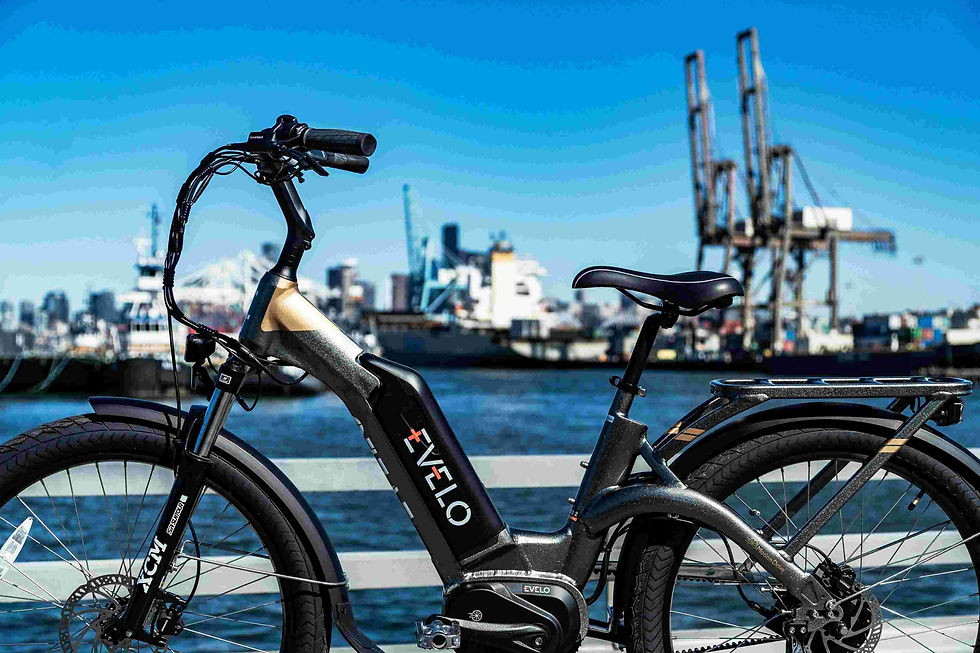
- E-bikes and scooters
- Power tools
- Home energy storage systems
- Consumer electronics
Why Lithium-Ion Fires Are So Dangerous
Lithium-ion battery fires present unique challenges:
- They generate extreme heat
- They can enter thermal runaway (a self-sustaining chain reaction)
- They release flammable and toxic gases
- They can re-ignite hours or even days later
F-500 vs. Water on Battery Fires
Aspect | F-500 | Plain Water |
Effectiveness | Specifically tested on lithium-ion battery fires | Not rated or tested for lithium-ion batteries |
Cooling performance | ~3× the cooling performance of water mist | Surface cooling only |
Thermal runaway control | Improved suppression of propagation | Often fails to stop internal thermal runaway |
Toxic gas reduction | Reduces hydrogen and toxic vapour release | May be ineffective or even hazardous |
Plain water extinguishers are not tested or rated for lithium-ion battery fires. While water may cool the surface, it often fails to stop internal thermal runaway—and in some cases, can be ineffective or even hazardous.
Fire Class Ratings: What Each Extinguisher Can Handle
F-500 Fire Extinguishers
Typically rated for:
- Class A – Ordinary combustibles (wood, paper, textiles)
- Class B – Flammable liquids (petrol, solvents, oils)
- Class F – Cooking oils and fats (commercial kitchens)
- Demonstrated lithium-ion battery use
Plain Water Extinguishers
Rated for:
- Class A only – Ordinary combustibles
Critical warning:*Using a plain water extinguisher on flammable liquids, hot oils, or lithium-ion batteries can be ineffective or dangerous, particularly if live electrical equipment is involved.
Smoke and Toxic Vapours: An Overlooked Factor
Fire isn't just about flames—smoke inhalation is one of the leading causes of injury and death in fires.
F-500 has a distinct advantage here. Because it encapsulates fuel vapours and combustion by-products:
- Toxic smoke is reduced
- Visibility may improve faster
- Secondary hazards from gases are lowered
Plain water extinguishers do not actively reduce toxic vapours. They may cool the fire, but smoke production often continues until the fuel is fully cooled or consumed.
Electrical Safety Considerations
While neither extinguisher is classified as an "electrical" agent like CO₂, important differences exist:
Aspect | F-500 | Plain Water |
Electrical safety | Widely used around energised equipment | Higher risk around live electrics |
Runoff | Reduced runoff requirements | Significant runoff, creates hazards |
Plain water extinguishers present a higher risk around live electrics, particularly in confined or poorly controlled environments.
Where Each Extinguisher Makes the Most Sense
F-500 Extinguishers Are Particularly Well-Suited For:
- Garages with EVs or e-bikes
- Workshops using lithium-ion tools
- Commercial kitchens
- Warehouses with mixed fire risks
- Data centres and technical environments
- Residential homes with modern electronics
Plain Water Extinguishers Still Have a Role:
- Low-risk Class A environments
- Offices with paper-based fuels
- Environments with **minimal modern hazards**

Compliance and Certification in Australia
Both extinguisher types must comply with Australian standards, but the protection they offer differs significantly:
Aspect | F-500 | Plain Water |
Certification | AS/NZS 1841.2 (water with additive) | AS/NZS 1841.2 |
Compliance status | Fully compliant | Fully compliant |
Additional protection | Class B, Class F, battery fires | Basic cooling only |
F-500 portable extinguishers are certified under AS/NZS 1841.2, the same standard governing water extinguishers with additives. This means they can be installed in compliance-driven environments while offering superior performance.
Important note: Currently, there is no Australian Standard specifically for Lithium-Ion battery fires. However, multiple tests have been conducted on Lithium-Ion battery fires, and the F-500 portable extinguishers successfully extinguished 2.4kWh lithium‑ion battery fires without reignition.
Cost vs Value: Looking Beyond the Price Tag
It's true that F-500 extinguishers typically cost more upfront than plain water extinguishers. However, value should be assessed based on:
Value Factor | F-500 | Plain Water |
Fire types covered | A, B, F + batteries | A only |
Speed of suppression | Faster | Slower |
Property damage reduction | Higher (less water used) | Lower (more water damage) |
Safety of occupants | Enhanced (smoke reduction) | Standard |
Escalation risk | Lower | Higher |
When viewed through this lens, F-500 often delivers significantly higher value, particularly in modern fire risk environments.
Training and Ease of Use
One advantage of both systems is simplicity:
- ✅ F-500 extinguishers are used exactly like water extinguishers
- ✅ No special training is needed beyond standard extinguisher use (although training is necessary for any extinguisher operation).
- ✅ The learning curve is minimal for occupants or staff
This makes upgrading from water to F-500 straightforward and risk-free from a training perspective.
Environmental and Clean-Up Considerations
Aspect | F-500 | Plain Water |
Toxicity | Non-toxic | Non-toxic |
Corrosiveness | Non-corrosive | Non-corrosive |
Biodegradability | Biodegradable | N/A (water) |
Clean-up effort | Easier (less agent used) | More secondary water damage |
Because less agent is typically required, clean-up is often easier than after heavy water application. Plain water may cause more secondary water damage due to the larger volumes needed.
Frequently Asked Questions
Can F-500 extinguishers be used on electrical fires?
While neither is classified as an electrical agent like CO₂, F-500 has been widely used around energised electrical equipment due to its rapid cooling and reduced runoff requirements. Plain water presents a higher risk around live electrics.
Are F-500 extinguishers legal in Australia?
Yes. F-500 portable extinguishers are fully certified under **AS/NZS 1841.2**, the same standard governing water extinguishers with additives.
Do I need special training to use an F-500 extinguisher?
No. F-500 extinguishers are used exactly like standard water extinguishers. No special training is required beyond standard extinguisher use.
Can I use plain water on a lithium-ion battery fire?
Plain water extinguishers are **not rated or tested** for lithium-ion battery fires. While water may cool the surface, it often fails to stop internal thermal runaway and can be ineffective or even hazardous.
Is F-500 safe for the environment?
Yes. F-500 is non-toxic, non-corrosive, and biodegradable. Because less agent is typically required, clean-up is often easier than after heavy water application.
What fire classes does F-500 cover?
F-500 extinguishers are typically rated for Class A (ordinary combustibles), Class B (flammable liquids), and Class F (cooking oils and fats), with demonstrated effectiveness on lithium-ion battery fires.
Conclusion: Why the Difference Matters More Than Ever
The comparison between F-500 fire extinguishers and plain water extinguishers is not just about technology—it's about adapting fire safety to the realities of modern life.
Feature | Plain Water | F-500 |
Primary mechanism | Cooling only | Cooling + encapsulation |
Fire classes covered | A only | A, B, F + batteries |
Lithium-ion effectiveness | ❌ Not rated | ✅ Tested and demonstrated |
Smoke reduction | ❌ No | ✅ Yes |
Re-ignition prevention | ❌ Limited | ✅ Enhanced |
Water volume required | High | Up to 80% less |
Plain water extinguishers rely solely on cooling and are limited to Class A fires. F-500, while still water-based, introduces encapsulation, faster cooling, fuel control, and demonstrated effectiveness on lithium-ion battery fires, flammable liquids, and hot oils.
As fire risks evolve, especially with the widespread adoption of lithium-ion technology, choosing an extinguisher that can handle more than yesterday's hazards is no longer a luxury—**it's a smart, forward-thinking safety decision.

This article is intended to provide general information and is not customised for any individual's specific circumstances. For personalised advice, please consult a qualified fire safety professional.
About Fire Products Direct
With years of experience in the Australian fire safety industry, Fire Products Direct is committed to providing expert guidance and high-quality fire protection solutions. We help businesses and homeowners navigate the complexities of fire safety to ensure they have the right protection for their specific needs.
Products Mentioned in This Guide


Comments